
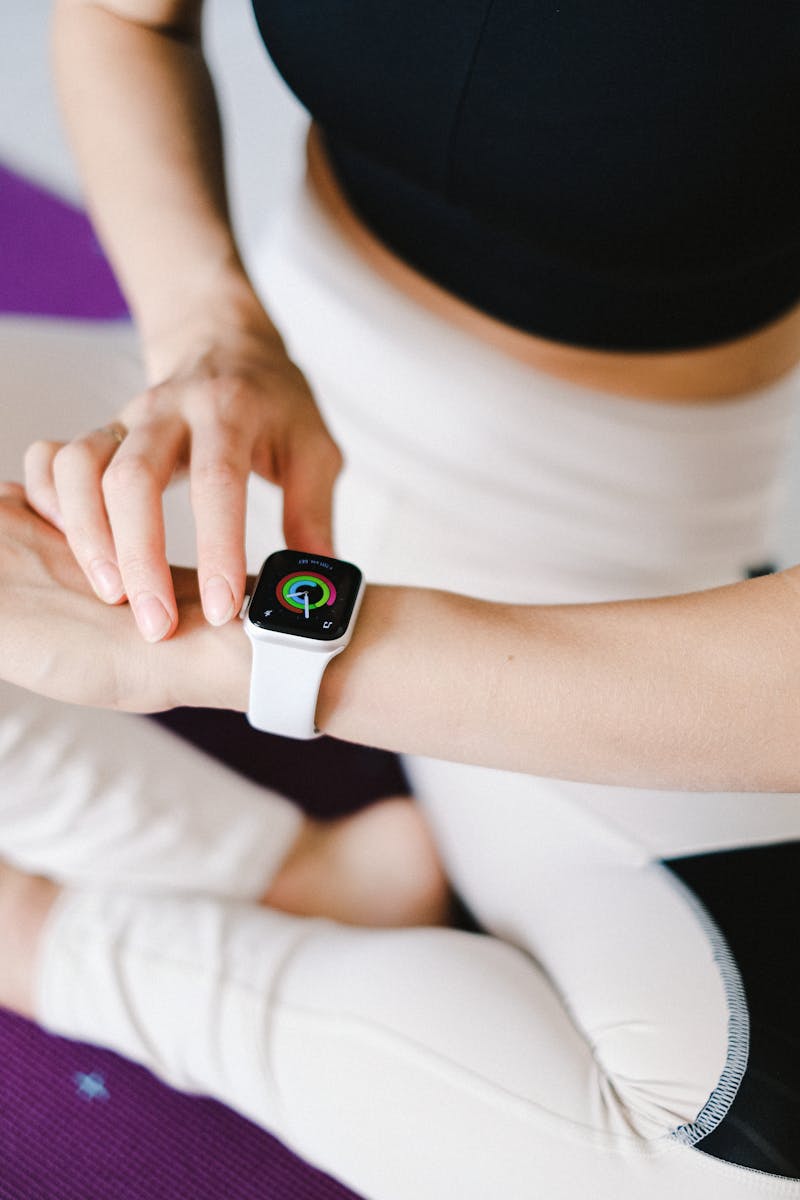
For years, Apple’s rings defined victory in the consumer wellness stack: move, exercise, stand. The UX was brilliant, the dopamine loop was tight, and the simplicity drove mass adoption. Closing rings became shorthand for discipline and consistency. It worked extremely well for the early wearables wave, where step counts and calorie burns were the only KPIs users cared about.
Fast forward to 2025 and the paradigm looks stale. Closing rings incentivizes brute-force volume. More steps, more movement, more streaks. Good for beginners, but fundamentally limited for anyone optimizing toward long-term health span, not just vanity metrics or habit formation. Human performance is not a linear staircase where more equals better. It is a cyclic system where peaks require troughs, stress requires recovery, and capacity expands only when load and rest are intelligently balanced.
The Apple Watch 11 signals that Apple knows the old model is running out of strategic runway. The company has pivoted the narrative. It is no longer selling motion tracking. It is selling physiological intelligence. The hardware stack is evolving from accelerometers and GPS toward biomarker-grade sensors that infer readiness. The OS layer is doing less cheerleading and more interpretation. The behavioral design is migrating from gamification to decision support.
In practice, the new generation of wearables is tracking capacity instead of quantity. Capacity is the real differentiator because it measures what a user can sustainably do tomorrow, not just what they did today. Elite athletes have measured capacity for decades because it is the only metric that scales performance without breaking the engine. Now this playbook is going mainstream.
Apple is not alone in this shift. Whoop, Oura, Garmin, and Polar have spent years pushing strain versus recovery models. The difference is that Apple has a billion devices in market and owns the most powerful consumer health UX on the planet. When Apple moves a behavioral goalpost, mass behavior follows. The Watch 11 is structured to normalize a new success metric for the general population: readiness.
Readiness distills multiple data streams: heart rate variability, resting heart rate, nocturnal temperature drift, sleep architecture, respiratory rate, mental stress proxies, and increasingly, micro-motion signatures that detect illness before symptoms. Instead of nagging you to stand up for sixty seconds each hour, the Watch interprets your body state and tells you whether pushing hard today will yield progress or regression. This aligns with how sports science works in real-world high performance environments. Load without recovery drives burnout. Recovery without load stagnates results. The winning loop is Effort to Recovery to Readiness to Effort.
This loop replaces the outdated ring-closing mentality. Closing rings focuses on input volume. Readiness focuses on output quality. With readiness, fewer high quality training blocks produce superior adaptations compared to daily mediocre grind. This is raw athletic truth and the consumer sector is finally catching up.
What Apple is really doing is reframing consumer health from productivity mindset to biological sustainability mindset. Fitness culture has historically borrowed productivist logic: daily streaks, no days off, hustle equals progress. That mindset breaks bodies, drives guilt cycles, and ignores the fundamentals of human physiology. Apple’s pivot is quietly killing that narrative by teaching users that skipping activity when recovery is low is not failure. It is strategic load management.
Why does this matter for the broader market? Because the real battle in health tech is not steps or calories. It is health span, chronic disease mitigation, cognitive longevity, and metabolic stability. These require better measurement, not louder motivation. Closing rings is motivational UX. Readiness is biosignal intelligence. That is a categorically higher-order value proposition.
There is also a macro trend at play. As the population ages, prevention beats treatment economically. Governments, insurers, and employers are pushing toward proactive care models that hinge on early detection and behavioral nudging. Readiness metrics feed that infrastructure because they highlight system stress before it becomes pathology. That is where wearables become healthcare nodes, not just lifestyle accessories.
The Watch 11 stack reinforces this strategic trajectory. New sensors pick up micro-variations in temperature, oxygen saturation, and autonomic signaling. New algorithms contextualize these signals against personal baselines. The UI compresses all that complexity into a single readiness interpretation users can act on. When readiness is high, it suggests you push. When readiness is low, it frames recovery as productive, not lazy. That framing shift is critical. It removes shame from rest and replaces it with efficiency logic.
The downstream impact is huge. Gyms, coaches, and digital fitness platforms are already reorganizing around adaptive programming models. The new gold standard is personalization at the physiological level. No more static workout schedules. No more one-size-fits-all plans. Training becomes dynamic. Load increases on high readiness days. Active recovery slots in on low readiness days. Progress becomes consistent instead of volatile.
Even mental health intersects here. Stress does not live in a vacuum. HRV drops when psychological stress spikes. Sleep quality tanks when anxiety rises. Temperature drifts during illness. Readiness becomes the integrator across physical, mental, and immunological states. This is a far more realistic representation of human life than ring metrics that pretend users are machines with uniform daily output.
All of this represents a subtle but radical UX shift. Rings celebrate completion. Readiness guides decision-making. Rings imply the goal is always more. Readiness says the goal is improvement over time with resilience as a guardrail. Rings optimize for dopamine. Readiness optimizes for longevity.
Apple has always been conservative in how it rolls out behavioral change. It never announces a revolution. It ships incremental, comfortable transitions that eventually reshape default user expectations. That is exactly what is happening here. Most users will not even notice that the underlying success model changed until they have been operating inside it for a year. Then they will look back at ring-closing culture and realize it was a crude approximation of progress.
Welcome to the age of adaptive health. The consumer health stack is graduating from basic tracking to actionable physiology, from motivation to intelligence, from volume to sustainability. Closing rings was a great onboarding mechanic. Readiness is the next competitive frontier. The users who understand this shift early will stop bragging about streaks and start optimizing for recovery-adapted performance. That is where the real ROI sits: not in doing more, but in doing the right thing at the right time.