
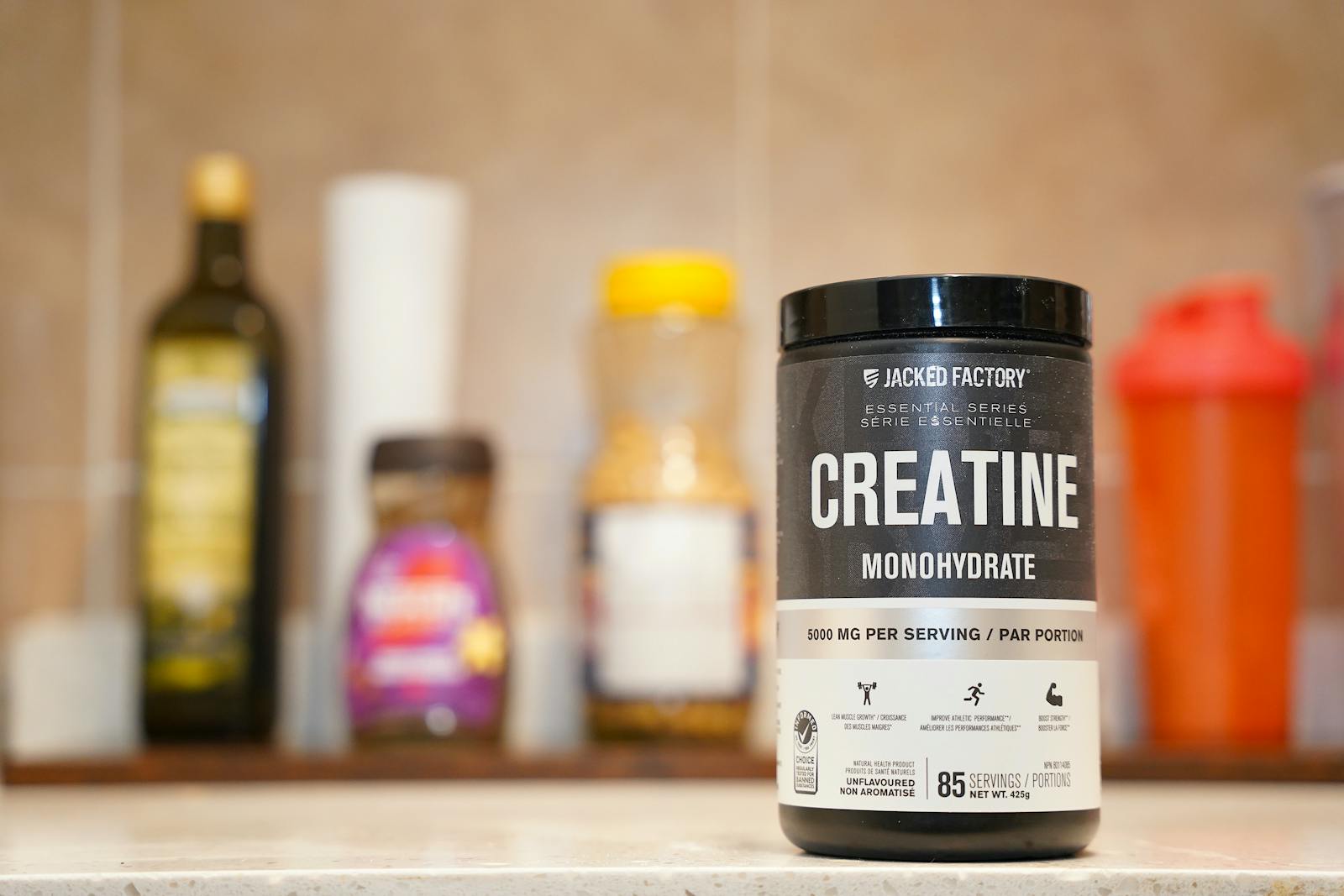
Creatine is one of the most clinically validated performance supplements in the sports nutrition space. It increases the availability of phosphocreatine inside muscle cells which directly supports ATP regeneration during explosive activity. In practical terms that means more quality reps, higher power output, and better capacity for repeated high intensity efforts. Your body produces roughly one to two grams per day and you get additional intake from meat and fish, but supplementation allows muscle creatine stores to rise by ten to forty percent. That margin is enough to generate measurable improvements in strength, power, lean mass, and training quality.
Now let us get to the operational question: how much and when. There are two pathways that lifters and endurance athletes commonly use. The first is the legacy loading protocol. This involves flooding the system with roughly twenty grams per day split into four doses for five to seven days followed by a maintenance phase of three to five grams per day. The logic behind loading is simple. You saturate muscle stores faster which front loads performance benefits. The tradeoff is that loading often triggers gastrointestinal discomfort for a subset of users. Bloating, cramping, and loose stools are not performance enhancers by any definition.
The second approach is steady intake from day one. That means taking three to five grams per day without a loading phase. Muscle saturation takes longer, typically three to four weeks, but you avoid digestive issues and compliance is easier. For most athletes who are playing a long game, the steady approach is the rational choice.
The research consensus is straightforward. Three to five grams of creatine monohydrate per day is the gold standard for most healthy individuals. Larger athletes and heavy strength trainees sometimes push closer to five grams, smaller athletes often sit comfortably at three. Timing does matter. You want creatine near your training window, either before or after the session, to maximize uptake. Dosing creatine at breakfast and training at night is suboptimal. The goal is to align creatine intake with the period when muscles are most insulin sensitive and blood flow is elevated. You do not need to be militant to the minute, but training proximity matters.
In terms of form factor, creatine monohydrate remains the industry leader. It is the most studied, the most cost efficient, and the most reliable form available. Exotic variants like hydrochloride or buffered creatine are marketing plays without superior data. Powder or capsules is a compliance decision. If you hate mixing powders, take capsules. If you want to save money, buy bulk powder. What you must focus on is quality control. Look for third party testing badges such as NSF Sport or Informed Sport to reduce contamination risk.
Safety is not a fringe topic here. Creatine has been studied for decades and the safety profile is robust for healthy individuals. Concerns about kidney stress are unsupported unless pre-existing kidney disease is present. As always, if you have a medical condition, involve your clinician before supplementation.
Creatine is not a magic bullet and it will not compensate for poor programming, weak nutrition, or broken recovery habits. It is a tactical asset that amplifies training quality. If you take three to five grams per day near your workouts, stay consistent for months, and lift or sprint with intent, you will earn the gains you are aiming for.