
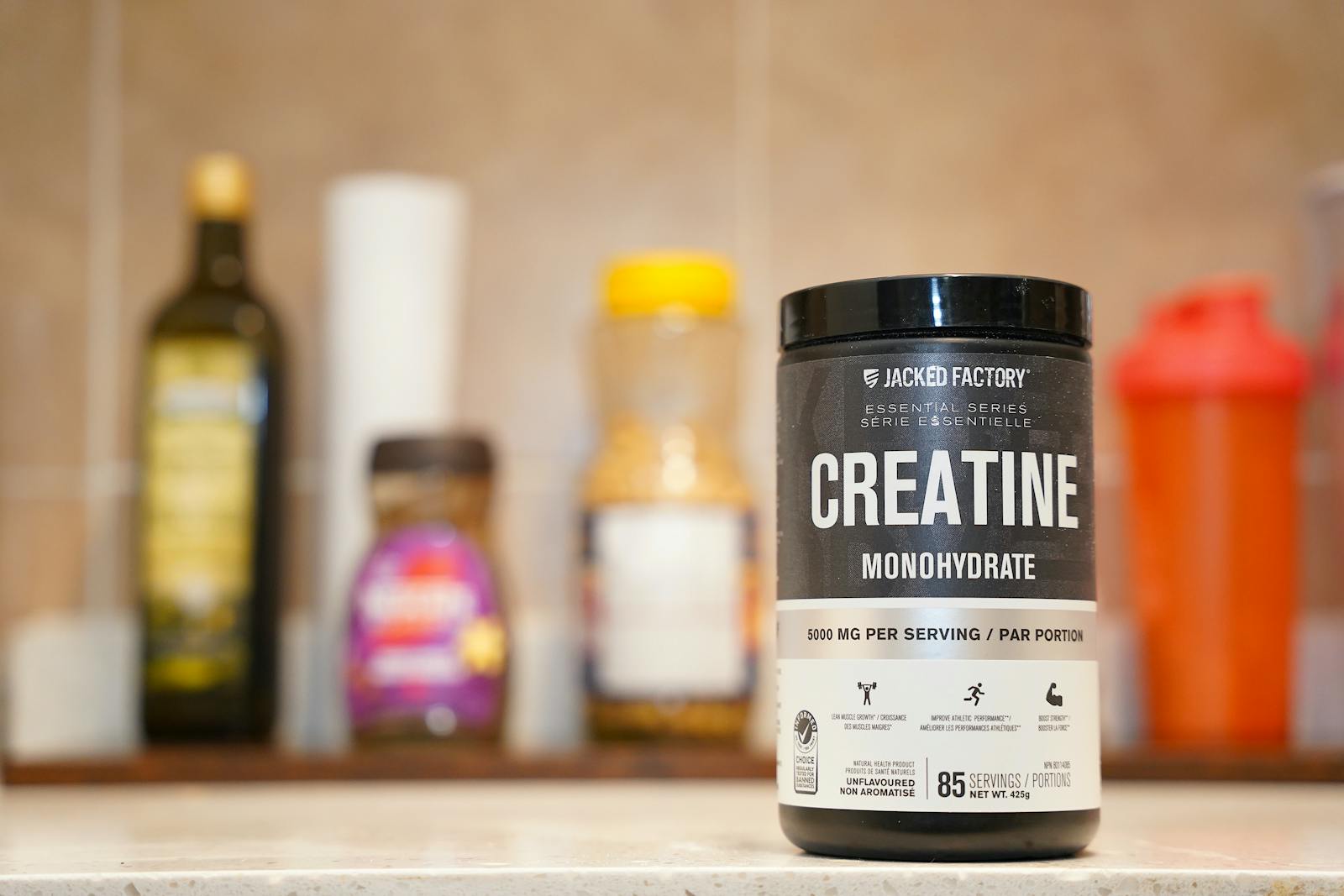
Creatine sits at the top tier of evidence-based performance supplements. It is not hype, it is not fringe, it is not a trend that will vanish in eighteen months. It is a compound the body already uses every day to support rapid ATP regeneration during explosive and high intensity efforts. This is why creatine has become standard equipment in strength and power sports, military prep pipelines, sprint disciplines, and any training environment where repeat bursts matter.
What is creatine at the biochemical level. It is a naturally occurring compound found in animal foods like meat and fish and synthesized in the body from amino acids including glycine, arginine, and methionine. Endogenous production lands at roughly one to two grams per day for most adults. That baseline is not enough to saturate muscle stores. Supplementation allows you to elevate intramuscular phosphocreatine by ten to forty percent depending on diet and training background. That extra buffer means more rapid ATP turnover which translates into more reps before fatigue, heavier loads with better bar speed, and improved quality across repeated sprints.
Recommended dosing is simple. Three to five grams per day of creatine monohydrate is the industry standard. You do not need complicated protocols or novel chemical forms. Creatine monohydrate is the most studied, most cost efficient, and most reliable version on the market. Powder or capsule form is a compliance decision. Powders mix easily with water and support hydration. Capsules are portable and convenient for travel. If you are inundated with marketing for hydrochloride or buffered creatine, ignore it. There is no compelling evidence that these newer forms outperform monohydrate when dosing is equivalent.
Benefits are highly activity specific. Creatine supports high intensity, short duration performance such as sprinting, Olympic lifting, powerlifting, jumping, combat sports, and CrossFit style intervals. It improves strength gains, lean mass accrual, and training density over time. Creatine does not generate the same performance lift for steady state endurance athletes because the energy system demands are different. Long distance running, cycling, and swimming rely heavily on oxidative metabolism, not phosphocreatine turnover. Endurance athletes may still benefit for strength training phases or sprint finishes but expectations should be set correctly.
There are strategic considerations as well. Select products that are third party tested under programs like NSF Sport or Informed Sport to avoid contamination and banned substances in competitive environments. Creatine has a strong safety profile for healthy individuals, but athletes with kidney disease or other medical conditions should engage a clinician before supplementing. Hydration and electrolyte management matter because creatine pulls water into muscle tissue, which is an advantage for performance but requires consistent fluid intake.
The net takeaway is straightforward. Creatine is a high leverage supplement for high intensity training environments. Three to five grams per day of monohydrate, consistent dosing, and basic hydration are the operational requirements. Pair that with structured programming and adequate protein intake, and you have a proven formula for strength and power improvements.